
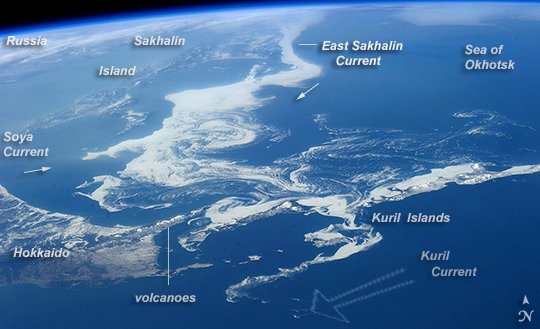
Russian President Vladimir Putin landed on Iturup (known in Japan as Etorofu) on August 13, becoming the first sitting Russian president to visit the disputed Kuril Islands. This high-profile visit instantly triggered a diplomatic firestorm, with Japanese Foreign Minister Toshimitsu Motegi summoning Russia’s ambassador to lodge a fierce protest, calling the move "absolutely unacceptable." Moscow swiftly dismissed Tokyo's complaints, firmly reiterating its sovereignty over the islands, which Soviet forces seized at the tail end of World War II. While this sovereignty friction looks like another routine chapter in an 80-year-old territorial stalemate that has prevented the two nations from ever signing a formal peace treaty, the broader geopolitical context reveals a much more dangerous escalatory shift.
The true significance of Putin’s provocative visit lies in the tightening military alignment between Moscow, Beijing, and Pyongyang. Just nine days prior to the visit, Japan’s freshly released 2026 defense white paper sounded an unprecedented alarm, explicitly warning that China, Russia, and North Korea are no longer operating as isolated regional challenges, but are actively coordinating their strategic and military maneuvers against Tokyo and its allies.
Japan's defense establishment pointed to a series of highly coordinated military escalations that transformed Putin’s Kuril visit from a bilateral border dispute into a flashpoint of a broader regional standoff:
Faced with a contiguous bloc of nuclear-armed adversaries, Japan is rapidly pivoting away from a singular reliance on its traditional security umbrella with the United States. Tokyo is aggressively spinning its own web of regional security architectures to establish a robust, interconnected deterrence structure.
Instead of fighting isolated diplomatic battles, Japan has successfully locked in foundational security pacts and Reciprocal Access Agreements (RAAs) with Australia and the Philippines. Furthermore, Tokyo’s new defense roadmap explicitly advocates for a historic, formalized security deal with South Korea, heavily building upon the foundation of the ongoing US-Japan-South Korea trilateral military exercises.
Ultimately, the map of the Indo-Pacific is being aggressively redrawn into two distinct, clashing coalitions. The Kuril Islands dispute is no longer just a stubborn relic of the Second World War; it is a live front line. As Beijing, Moscow, and Pyongyang continue to consolidate their actions as a singular strategic force, Japan, Australia, South Korea, and the Philippines are being pushed to operate as a tightly unified, multi-national firewall to preserve the regional balance of power.