
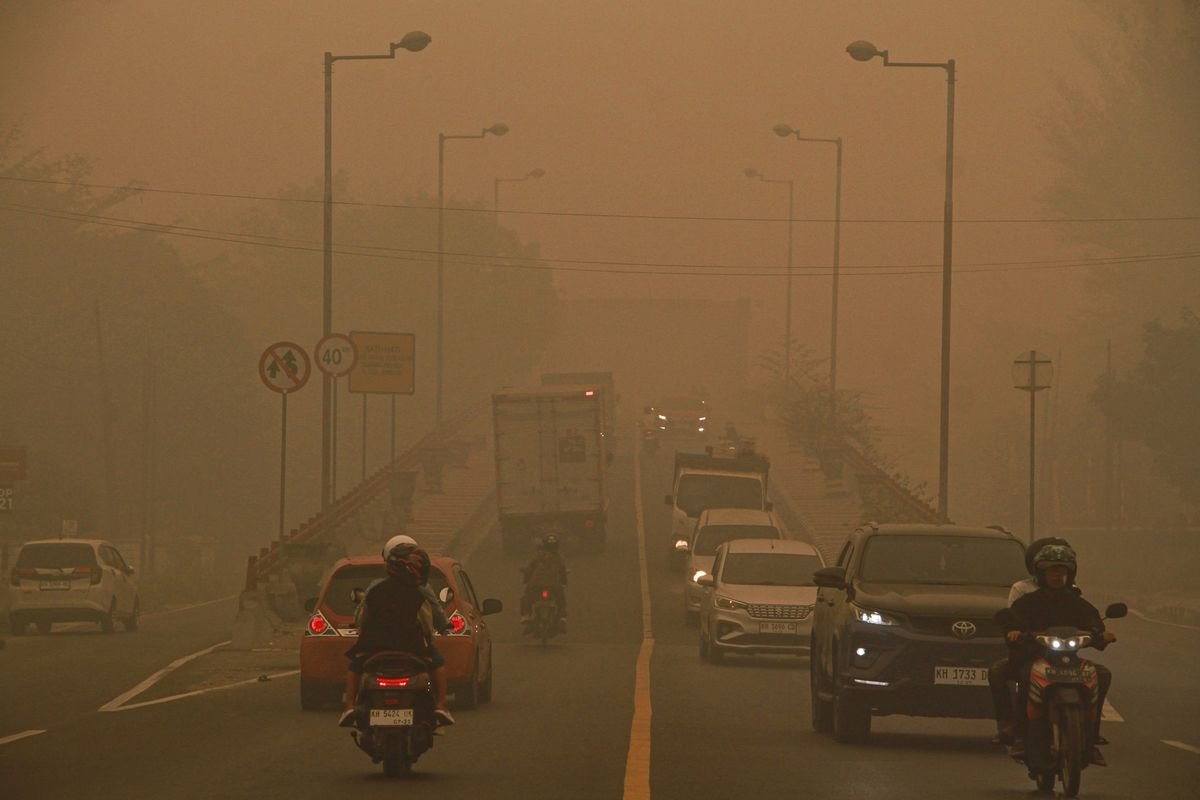
On October 14, part of Singapore’s air hit the “very high” band, the country’s top level, while East Timor shut schools nationwide for three days. The day before, Singapore and Kuala Lumpur had ranked as the two most polluted major cities in the world. The smoke comes from fires on Borneo and Sumatra, many burning in peatland, which smoulders underground and is very hard to put out. These are Indonesia’s most intense fires in 11 years, driven by a strong El Nino, and an independent monitor says they burned more than 1.9 million hectares between January and September. Tens of thousands of people in Indonesia have sought treatment for breathing problems, and one fire in Bangka Belitung razed nearly 300 homes. Malaysia’s foreign minister says Indonesia has deployed about 60,000 personnel, but thick smoke grounded 34 aircraft.
The money is draining fast. A Sunway University economist estimates Malaysia is losing 20 to 50 million ringgit a day, and says air pollution can cut tourist arrivals by up to 8 percent. Johor vegetable farmers report falling output and halved fruit yields, and palm oil may feel the damage six to twelve months later. Firefly suspended flights between Kuala Lumpur and Singapore from October 10, and Singapore brought back subsidised care for haze related illness and began handing out N95 masks. Singapore’s air has been in the unhealthy range on and off since September 4. One economist expects the country’s losses to pass the S$1.83 billion record set in 2015, and Eco-Business estimates S$3.2 billion to S$3.9 billion.
So why does the problem keep returning? ASEAN has had a haze agreement since 2003, but it settles disputes by consultation, not enforcement. Singapore’s 2014 law lets it fine polluting companies up to S$2 million, yet no company has been fined or sued under it. This month Singapore served notices on seven companies, and its prime minister says it will explore joint action with other countries. But a Singapore legal scholar says it cannot prove cases on the ground without Indonesian cooperation, and Jakarta has made its official forest mapping platform view only, with prison terms of up to nine years for extracting data without approval. Malaysia has no such law at all.
Politics adds another layer. Indonesia has not declared a national disaster, and a senior minister says the country is still capable of managing the fires. On October 21, President Prabowo said the fires were not only natural, called for investigations into corporations, and threatened to revoke the permits of any found in violation. He also lashed out at countries that “insult” Indonesia, promising to expose their companies “when the time comes.” Indonesia’s police chief had said earlier that some foreign parties linked to the fires came from neighbouring countries, and that police are investigating 98 corporations. Singapore offered firefighting and cloud seeding help, and Malaysia offered aircraft and personnel, but Jakarta has not accepted either offer. Singapore is also Indonesia’s largest foreign investor, supplying about 30 percent of it in 2025, which gives its neighbours reason for caution.
The pressure is now moving to the regional level. Malaysia’s foreign minister notes that haze is not classed as a natural disaster under ASEAN’s disaster mechanism, and he will raise it at the foreign ministers’ meeting before the Manila summit. The Philippines, this year’s chair, has confirmed it is on the agenda. The real test is whether ASEAN can move beyond consultation toward something that holds polluters, and the governments that license them, to account.