
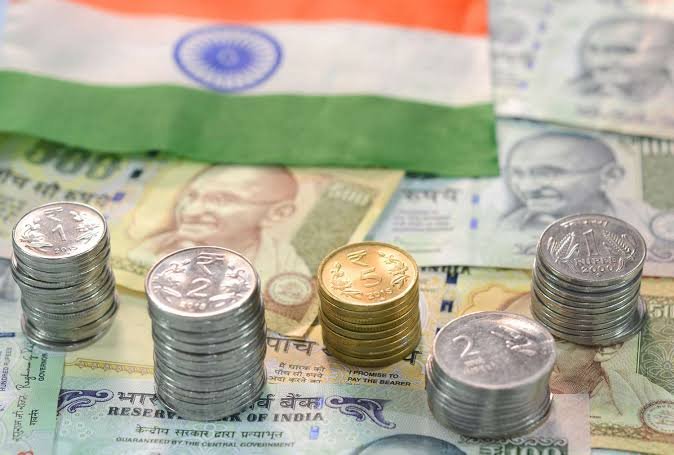
On October 7, the Reserve Bank of India’s Monetary Policy Committee voted unanimously to raise the repo rate by 0.25 points to 5.50 percent, the first hike since February 2023. It also changed its stance from neutral to “calibrated tightening,” though two members preferred to stay neutral. The minutes say this rules out a rate cut in the near term, and that the next move will be either a hike or a pause. The reason is prices. The RBI now expects inflation of 5.2 percent for the fiscal year, up from 5.0 percent, and about 6 percent in the October to December quarter, the top of its comfort range. It still raised its growth forecast to 7.1 percent from 6.7 percent, a sign that the central bank sees demand as strong enough to withstand tighter policy.
The hike did not calm the currency much. Early this month the rupee approached its record low of 96.96 per dollar, pushed down by costly crude oil, foreign investors pulling money out, and heavy demand for dollars. To defend it, the RBI sold about 9.8 billion dollars in a single week, and India’s reserves fell for five straight weeks, by 59.7 billion dollars in total, from a record 785.7 billion on September 4 to 726 billion on October 9. On October 10 it opened a dollar window for state owned oil companies and tightened rules on currency derivatives. The rupee has since recovered to 94.96, but a bank economist says dollar demand from oil imports will keep draining reserves, and a treasury head expects the rupee to stay near these levels until crude and the dollar come down.
Higher rates also have a cost for businesses. Bank credit grew 19.4 percent in September, and Business Standard reports that the hike may slow growth in the second half of the year, just when industry needs cheap credit to expand. The central bank is therefore trying to cool prices and defend the currency without choking the borrowing that feeds India’s expansion.
India is not alone, but the region is not moving together. Pakistan raised its rate by 1 point to 11.5 percent in late April and held it on September 14, with seven of the ten committee members voting to wait. Inflation rose to 11.1 percent in August from 9.2 percent in July, against a medium term target of 5 to 7 percent. Pakistan’s external position looks steadier than India’s, with strong workers’ remittances, a successful 3 billion dollar Eurobond issue, and central bank reserves that reached 21.4 billion dollars. Even so, the bank warns that risks from energy prices have increased.
Sri Lanka raised its rate by 1 point to 8.75 percent in May and held it at the end of September, as inflation reached 8 percent, a three year high. Its central bank expects inflation to stay in the high single digits through early 2027 before easing toward its 5 percent target, while growth of 4.7 percent in the first half and reserves of 6.9 billion dollars give it some room. Its next review is on November 20.
Bangladesh went the other way, cutting to 9.5 percent from 10 percent in July, its first cut in years, then holding on September 23 while inflation stayed near 8.3 percent and the government raised fuel prices. The common thread is energy prices, and each central bank is balancing inflation against growth and its dollar reserves. How long oil stays high will decide which of these approaches proves right.