
On June 1, Indian Prime Minister Narendra Modi hosted Myanmar's Min Aung Hlaing in New Delhi, marking the junta leader's first foreign trip since a widely criticized election installed him as president. Human rights groups viewed the visit as a boost to the legitimacy of a government that seized power in the 2021 coup. India's calculation, however, was different: isolating Myanmar's military leadership would not necessarily weaken it or restore democratic rule. Instead, India risked leaving greater space for China to deepen its influence.
China has invested billions of dollars in the China-Myanmar Economic Corridor, a major infrastructure route connecting Yunnan Province with the deep-sea port at Kyaukpyu on the Bay of Bengal. The corridor gives Beijing an important economic and strategic foothold close to India's regional interests.
The significance of China's advantage became clear shortly after Min Aung Hlaing left India and traveled to Beijing. There, he received a 21-gun salute and signed 18 agreements, while Xi Jinping encouraged faster progress on the economic corridor.
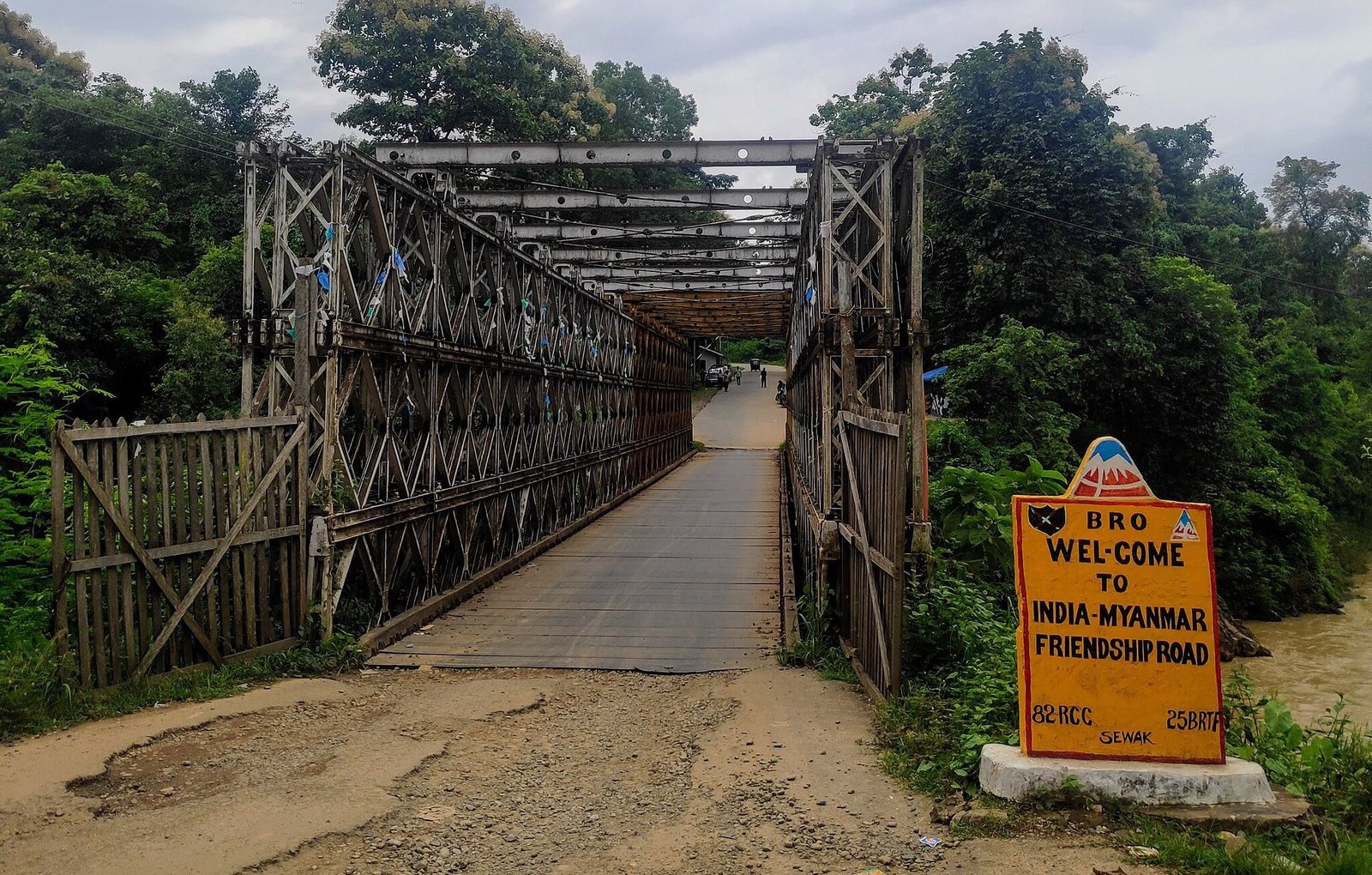
China's position in Myanmar is supported by:India's own infrastructure projects in Myanmar have progressed more slowly. The Kaladan transport project and the highway connecting India, Myanmar, and Thailand have faced years of delays and cost overruns.
For New Delhi, this creates a difficult strategic gap. India wants stronger economic and transportation links with Southeast Asia, but delays have allowed China to establish a stronger position. Engagement with Myanmar's leadership therefore gives India an opportunity to protect its interests while attempting to accelerate its own regional projects.
Countering Chinese influence is only part of India's calculation. Myanmar's civil war directly affects India's northeastern states, where instability can contribute to cross-border insurgency, refugee movements, and criminal activity.
Cyber-scam networks operating from the region have also affected Indian citizens, with thousands reportedly becoming victims. For India, developments inside Myanmar therefore represent a direct security concern rather than simply a distant foreign-policy issue.
During his visit to New Delhi, Min Aung Hlaing personally assured India that Myanmar's territory would not be used against Indian security interests. Such commitments give India another reason to maintain communication rather than completely isolate Myanmar's military government.
India is choosing engagement because losing Myanmar's strategic space to China could carry security and economic costs that isolation alone may not prevent.