
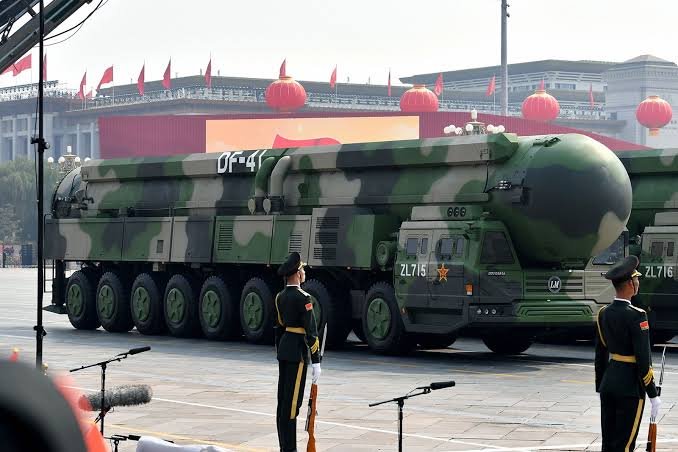
On July 6, a Chinese nuclear-powered submarine fired a ballistic missile into the Pacific, marking the first time China has tested this type of weapon in international waters. While the missile launch itself attracted attention, the bigger concern for regional governments was the limited advance notification provided by Beijing.
China reportedly gave the United States and Japan only a few hours' warning, while Australia received around 23 hours of notice. This falls well short of the standards outlined in the Hague Code of Conduct against ballistic missile proliferation, an agreement China has never signed.
Beijing described the July 6 launch as routine and lawful. However, the absence of binding notification rules governing Chinese missile launches in the region means that neighboring countries have limited mechanisms to challenge or prevent such tests. For governments already concerned about China's growing military capabilities, the lack of transparency can be as important as the weapons themselves.
The test is also taking place as several Indo-Pacific countries are expanding their military capabilities. Japan has approved a record defense budget of more than $58 billion for 2026, with significant spending directed toward long-range missiles, coastal defense, and other capabilities designed to respond to potential regional threats.
Australia's submarine plans are particularly significant. Under AUKUS, Canberra aims eventually to operate up to 18 nuclear-powered attack submarines, while the earlier-than-expected presence of US Virginia-class submarines in Western Australia signals a faster pace of military cooperation among allies.
None of these developments began with the July 6 missile test. Rising tensions, China's expanding military capabilities, and growing uncertainty over regional security have been driving defense investment for years. However, each missile launch conducted without clear and widely accepted notification procedures adds another layer of uncertainty.
For Indo-Pacific governments, the central concern is increasingly about the gap between military activity and diplomatic rules. If that gap continues to grow, countries may feel compelled to strengthen their defenses faster than diplomacy can build trust, increasing the risk of an accelerating regional security competition.
China's missile test deepens Indo-Pacific security concerns, accelerating regional military buildup as diplomacy struggles to keep pace.